

Explore the most critical cybersecurity trends of 2026, from agentic AI and quantum-ready encryption to the rise of identity-first security and operational resilience.
The digital landscape of 2026 is no longer defined by simple firewalls or static antivirus software. As we move deeper into the decade, the boundary between “the network” and “the user” has completely dissolved. In its place is a complex, hyper-connected ecosystem where artificial intelligence (AI) acts as both the ultimate shield and the most dangerous weapon.
For CISOs and IT leaders, 2026 is the year of operational resilience. The focus has shifted from trying to prevent every single breach to building systems that can withstand, adapt to, and recover from inevitable attacks in real-time.
1. The Rise of Agentic AI: A New Era of Automated Warfare
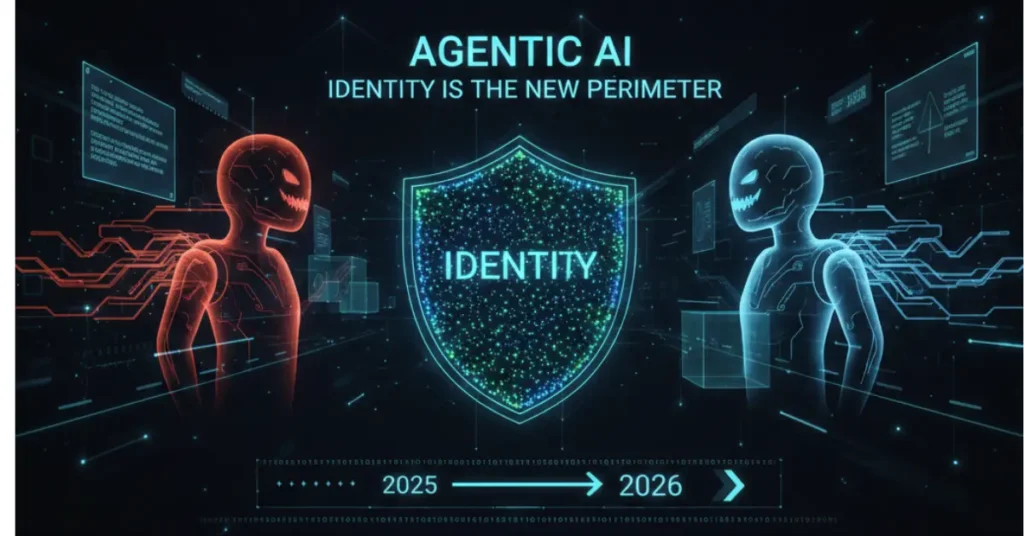
Artificial Intelligence has evolved from a “chat assistant” into Agentic AI—autonomous systems capable of reasoning, planning, and executing complex tasks without human intervention.In 2026, this technology is the primary driver of both cyberattacks and cyber defense.
- The Offensive Side: Hackers now use “Shadow Agents” to automate the entire kill chain. These agents can perform reconnaissance, find zero-day vulnerabilities, and launch personalized phishing attacks at a scale that was previously impossible.
- The Defensive Side: Security Operations Centers (SOCs) are deploying AI agents to handle “alert fatigue.” These autonomous defenders can isolate compromised cloud instances or revoke suspicious permissions in milliseconds—faster than any human analyst could react.
2. Identity is the New Perimeter
The traditional network perimeter is dead. With the explosion of remote work, IoT devices, and cloud-native applications, Identity has become the only reliable way to secure an organization.
In 2026, we are seeing a massive shift toward Identity-First Security. This involves:
- Machine Identity Management: Managing the credentials of non-human entities (like AI bots and service accounts), which now outnumber human users by nearly 80 to 1.
- Deepfake Authentication: As AI-generated voice and video clones become indistinguishable from reality, organizations are adopting “Liveness Detection” and cryptographic watermarking to verify that the person on the other end of a Zoom call is actually who they say they are.
3. Quantum-Ready Cryptography: The “Q-Day” Countdown
While fully functional quantum computers capable of breaking RSA encryption are still on the horizon, the preparation has officially begun. In 2026, Post-Quantum Cryptography (PQC) is moving from theoretical research to mandatory compliance.
The threat of “Harvest Now, Decrypt Later”—where attackers steal encrypted data today to decrypt it once quantum tech matures—has forced industries like finance and healthcare to adopt quantum-resistant algorithms now.
Key Term: Crypto-Agility – The ability for an organization to quickly switch between different encryption standards without overhauling its entire IT infrastructure.
4. Zero Trust: From Buzzword to Baseline
By 2026, Zero Trust Architecture (ZTA) is no longer an “extra” security layer; it is the default operating model.The core philosophy remains: Never Trust, Always Verify.
However, the 2026 version of Zero Trust is more dynamic. It uses Continuous Adaptive Risk and Trust Assessment (CARTA). Instead of a user being “trusted” for an entire session after one login, their access is constantly re-evaluated based on:
- Current device health.
- Geographic location.
- Typing patterns (biometrics).
- The sensitivity of the data being accessed.
5. Resilience Over Prevention: The Shift to “Defensible” Systems
The “Prevention-Only” mindset failed because the attack surface is now too large to fully cover. Leading organizations in 2026 are focusing on Cyber Resilience.
This trend emphasizes:
- Immutable Backups: Ensuring data cannot be altered or deleted, even during a massive ransomware attack.
- Automated Recovery: Using AI to rebuild clean environments from code within minutes of an incident.
- Third-Party Risk Management: As attackers increasingly target the service supply chain, companies are demanding real-time security transparency from their vendors.
Summary Table: Cybersecurity 2025 vs. 2026
| Feature | 2025 Standard | 2026 Trend |
| AI Role | Generative/Assistive | Agentic/Autonomous |
| Primary Perimeter | Cloud/VPN | Identity & Access |
| Encryption | Standard AES/RSA | Post-Quantum Cryptography (PQC) |
| Response | Manual Playbooks | Automated Incident Orchestration |
| Strategy | Breach Prevention | Operational Resilience |
Frequently Asked Questions (FAQs)
What is the biggest cybersecurity threat in 2026?
The most significant threat is AI-driven social engineering, specifically deepfakes and autonomous phishing agents. These allow hackers to conduct highly personalized, multi-channel attacks at an unprecedented scale.
How is AI helping cybersecurity in 2026?
AI is being used to automate routine security tasks, predict potential attack paths before they are exploited, and provide real-time behavioral analysis to detect anomalies that traditional systems miss.
What is Post-Quantum Cryptography?
PQC refers to cryptographic algorithms (usually based on complex math like lattice-based cryptography) that are designed to be secure against the processing power of both classical and quantum computers.
Why is Identity Security so important now?
Because data is no longer stored behind a single corporate firewall. Since users access data from anywhere on any device, verifying the identity of the user (or the machine) is the only way to ensure only authorized people have access.