
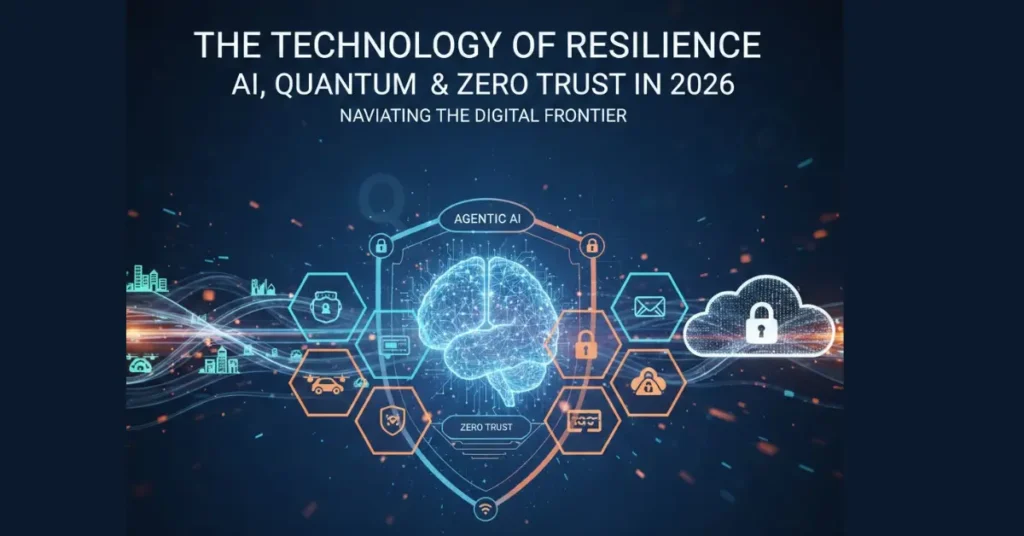

Technology in 2026 is moving fast. We’re talking AI agents, Zero Trust, and quantum-proof networking. Here is a look at how this technology actually works and why it matters to you.
I was thinking the other day about how much technology has changed just in the last few years. Remember when “cybersecurity” basically meant not clicking on emails from random princes and making sure your password had a capital letter? Man, those were simpler times. Fast forward to 2026, and honestly, if you aren’t paying attention to the technology behind your network, you’re basically leaving your front door wide open in a storm.
It feels like we’re living in a sci-fi movie sometimes, right? Everything is connected—your fridge, your car, your office—and that means the technology keeping it all running has to be way more “awake” than it used to be.
1. AI Isn’t Just a Tool Anymore—It’s an Agent
To be honest, I’m a bit tired of hearing the word “AI” every five seconds, but in cybersecurity technology, it’s actually doing something cool now. We’ve moved into Agentic AI.
In my experience, older security tech was pretty passive. It would just scream “Hey! Something’s wrong!” and then wait for a human to wake up and fix it. But modern technology doesn’t wait. These AI agents actually think (well, simulate thinking) and act. If they see a weird login from a server in a country you’ve never visited, they don’t just send an email. They shut down the port, reset the credentials, and then tell you what they did. It’s like having a security guard who actually chases the intruder instead of just watching them on the camera.
2. Zero Trust: The “Guilty Until Proven Innocent” Technology
I know it sounds a bit cynical, but “Zero Trust” is probably the best thing to happen to networking technology in a decade. The old way of doing things was like a castle—once you crossed the drawbridge, you could go anywhere.
But nowadays? That’s a disaster waiting to happen. Modern technology uses a “never trust, always verify” approach. I feel like it’s a bit like a high-security club. Even if you’re already inside, every time you want to go to the bar or the VIP lounge, the bouncer asks for your ID again. It’s a bit of a hassle, sure, but it means if one person messes up, the whole network doesn’t go down.
3. The Quantum Boogeyman and PQC
Have you heard about “Q-Day”? It sounds like a bad summer blockbuster, but it’s actually a big deal in the technology world. Basically, quantum computers are getting so powerful that they’ll eventually be able to crack all our current passwords and encryption like they’re nothing.
So, the technology we’re building right now—Post-Quantum Cryptography (PQC)—is all about being “quantum-resistant.” It’s basically math so complicated that even a computer using the laws of physics can’t solve it quickly. Thats a lot of pressure on the math nerds, but I’m glad they’re on it. We’re already seeing this technology being baked into new routers and cloud systems. Better safe than sorry, right?
4. SASE: The Networking Technology “All-in-One”
I’ve noticed that most people hate dealing with VPNs. They’re slow, they drop out, and they’re just… clunky. That’s why SASE technology (Secure Access Service Edge) is taking over.
Instead of having your security in one box and your internet in another, SASE just mashes them together in the cloud. It makes the network way faster because the security check happens right next to where you are, rather than sending your data halfway across the world just to be “checked” and sent back. It’s just smarter technology, period.
Conclusion: It’s a Constant Race
At the end of the day, technology in cybersecurity is just a giant game of cat and mouse. Every time we build a better wall, someone builds a taller ladder. But with things like AI agents and Zero Trust, I feel like we’re finally starting to get a bit of an edge.
It’s a bit overwhelming to keep up with, I know. I mean, if I had a dollar for every “new must-have” technology I’ve seen come and go, I’d be retired on a beach somewhere. But these ones? They feel like the real deal.
FAQs
Q: Does all this new technology mean I don’t need to worry about passwords?
Haha, I wish. No, you still need to be smart. Technology can do a lot, but if you write your password on a post-it note on your monitor, the best AI in the world can’t save you. Use a manager!
Q: Is 5G technology actually dangerous for security?
It’s not “dangerous” in a scary way, but it does connect way more stuff (IoT). More stuff means more targets. That’s why “Network Slicing” technology is so important—it keeps the “smart” lightbulbs away from the “sensitive” bank data.
Q: Is quantum technology going to break my bank account tomorrow?
Nah, not tomorrow. We’re still a few years away from the “scary” quantum stuff, but the technology to protect us is being installed right now. So don’t go emptying your 401k just yet.
Q: What’s the easiest way to improve my own tech security?
Honestly? Turn on Multi-Factor Authentication (MFA) on everything. It’s the simplest “high-tech” move you can make that actually stops most hackers in their tracks.